
Back to Blogs

What to Know Before Getting a Dental Bridge

Dental bridges are fixed restorations that replace missing teeth, restoring function, aesthetics, and preventing shifts in adjacent teeth.

July 10, 2026
β€’
2 min read
Tyler bites cautiously into a slice of toast, a thoughtful expression on his face, wearing a navy crewneck sweater in his kitchen.
Back to Blogs

What to Know Before Getting a Dental Bridge

Tyler bites cautiously into a slice of toast, a thoughtful expression on his face, wearing a navy crewneck sweater in his kitchen.

Dental bridges are fixed restorations that replace missing teeth, restoring function, aesthetics, and preventing shifts in adjacent teeth.

July 10, 2026
β€’
2 min read

Understanding Dental Bridges for Tooth Replacement

A dental bridge fills the gap created by one or more missing teeth by anchoring an artificial tooth (pontic) to adjacent natural teeth or dental implants. This restorative solution helps maintain your bite, prevent shifting of surrounding teeth, and restore your smile's aesthetics and function.

Missing a tooth can impact more than just your smile; it affects chewing, speech, and the alignment of your remaining teeth. At Lakeland Dental Center, Dr. Mark Farag often recommends dental bridges as a reliable and effective way to address these issues. This treatment is a common component of general dentistry and helps many patients regain confidence in their oral health and appearance.

When considering tooth replacement options, understanding the benefits and specifics of a dental bridge is crucial. Dr. Farag and his team provide comprehensive evaluations to determine if a bridge is the most suitable choice for your individual dental needs, ensuring a tailored treatment plan.
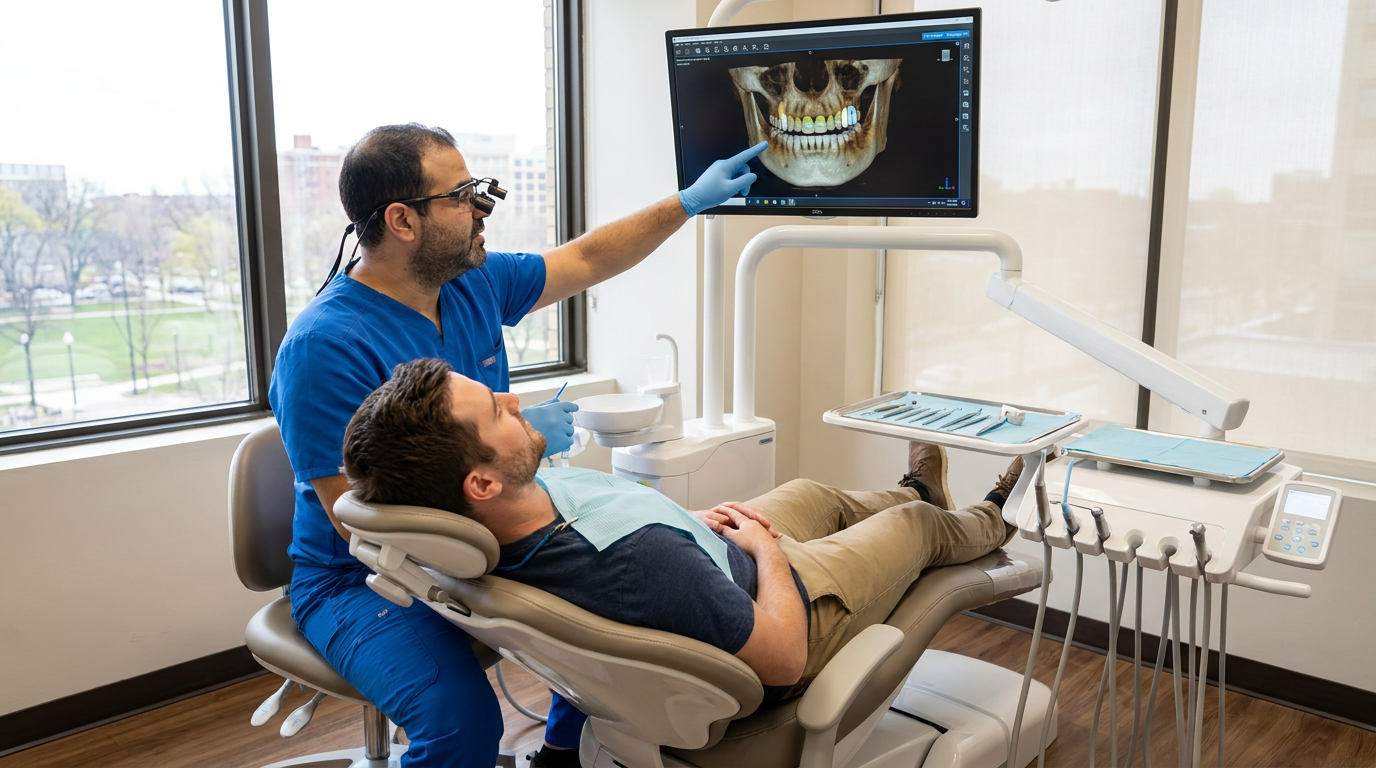
Dr. Mark Farag, a man in his 40s wearing blue scrubs and a dental loupe, gently examines Tyler, who is seated in a modern dental chair.

Types of Dental Bridges Available

There are several types of dental bridges, each designed for specific situations, primarily differing in how they are supported and placed in the mouth. The choice depends on the location of the missing tooth, the condition of adjacent teeth, and your overall oral health.

Dr. Mark Farag at Lakeland Dental Center considers various factors when recommending a bridge type. His goal is always to provide the most stable and aesthetic solution for his patients in Lakeland, FL. Understanding the different options can help you feel more informed about your treatment journey.

Common Dental Bridge Types

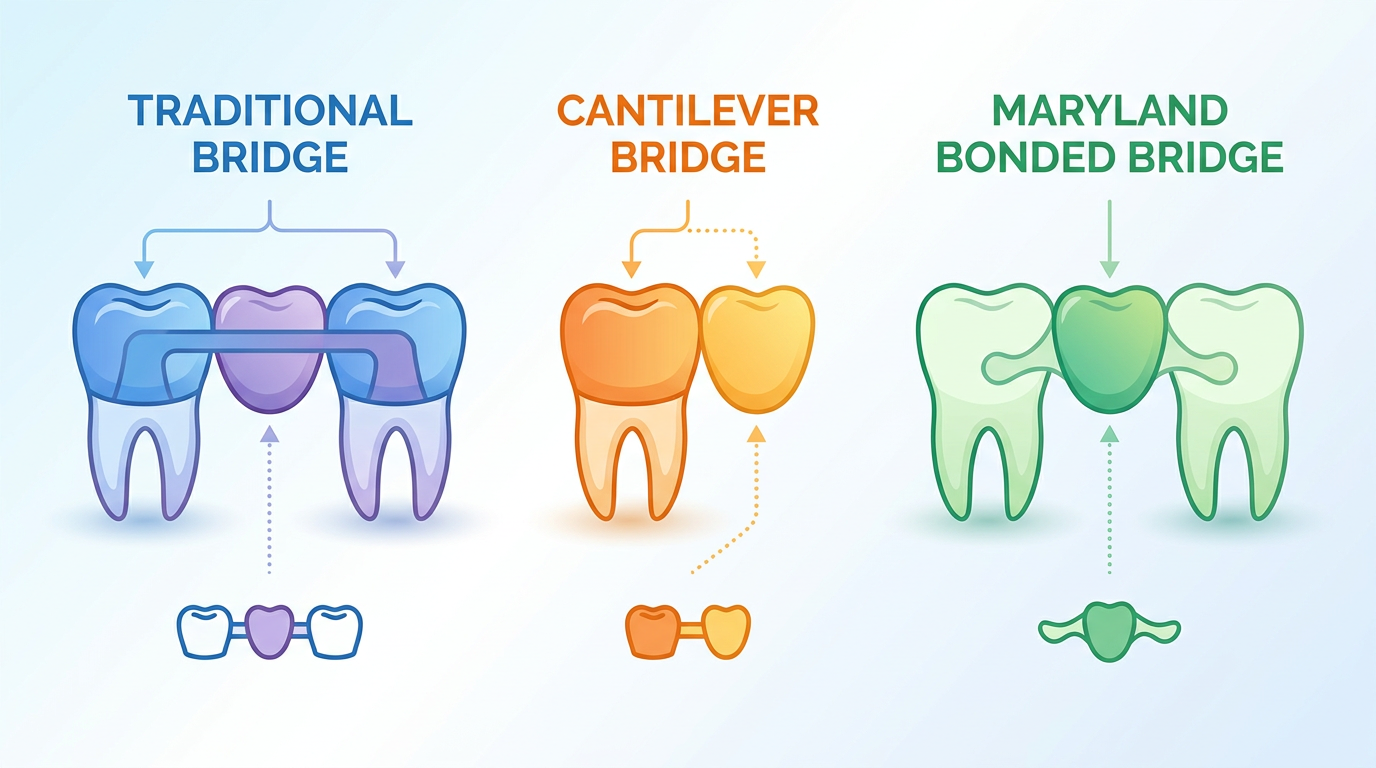
  • Traditional Bridge: This is the most common type, where a pontic is held in place by crowns cemented onto the natural teeth adjacent to the gap. These abutment teeth must be strong and healthy to support the bridge.
  • Cantilever Bridge: Used when there is only one natural tooth adjacent to the missing tooth, this bridge is supported by a crown on a single abutment tooth. It's less common due to the increased leverage on the supporting tooth.
  • Maryland Bonded Bridge: This bridge uses a metal or porcelain framework bonded to the back of the adjacent teeth, rather than requiring crowns. It's a more conservative option but offers less strength than traditional bridges.
  • Implant-Supported Bridge: When you have more than one missing tooth, an implant-supported bridge uses dental implants instead of natural teeth to anchor the bridge. This offers superior stability and longevity, and is a popular choice at our practice for multiple missing teeth.
A conceptual visual comparing three types of dental bridges: a traditional bridge clearly showing crowns on two abutment teeth supporting a pontic, a cantilever bridge with one abutment tooth, and a Maryland bonded bridge with wing-like

Who Is a Good Candidate for a Dental Bridge?

Ideal candidates for dental bridges typically have one or more missing teeth and healthy natural teeth bordering the gap for support. Good oral hygiene habits and sufficient bone density are also crucial to ensure the long-term success of the restoration.

Dr. Mark Farag meticulously evaluates each patient to determine candidacy for a dental bridge. He considers factors like gum health, the strength of potential abutment teeth, and your overall health. For patients whose adjacent teeth are not strong enough or who prefer not to alter them, implant-supported bridges are an excellent alternative.

Factors for Candidacy

  • Missing Teeth: You must have one or more consecutive missing teeth that need replacement. Bridges can effectively replace a small number of missing teeth.
  • Healthy Abutment Teeth: For traditional bridges, the natural teeth on either side of the gap must be strong enough to support the crowns and the pontic.
  • Good Oral Hygiene: Patients must be committed to maintaining excellent oral hygiene to prevent cavities and gum disease around the bridge and supporting teeth.
  • Adequate Bone Support: While less critical than for implants, sufficient bone density is still important to ensure the stability of the surrounding teeth and, if applicable, for implant placement.
  • No Active Gum Disease: Any active periodontal disease must be treated and stable before a bridge can be placed to ensure the health of the supporting structures.
Brittany, smiles genuinely at a friend across a cafe table, her teeth looking healthy and well-maintained.

The Dental Bridge Procedure Explained

The dental bridge procedure typically involves two or more appointments, beginning with preparing the abutment teeth, taking impressions, and then permanently cementing the custom-made bridge at a subsequent visit for a secure and functional fit.

At Lakeland Dental Center, Dr. Farag employs a precise process to ensure optimal results. The first step involves gently reshaping the natural teeth that will support the bridge, creating space for the crowns. This preparation ensures a perfect fit and natural appearance. Digital impressions are then taken, which are used by a dental lab to custom-craft your bridge to match your existing teeth in shape, size, and color.

During your second visit, Dr. Farag will check the fit and bite of the permanent bridge. Once he confirms everything is ideal, it will be permanently bonded into place. Patients often receive a temporary bridge during the fabrication period to protect the prepared teeth and maintain aesthetics.

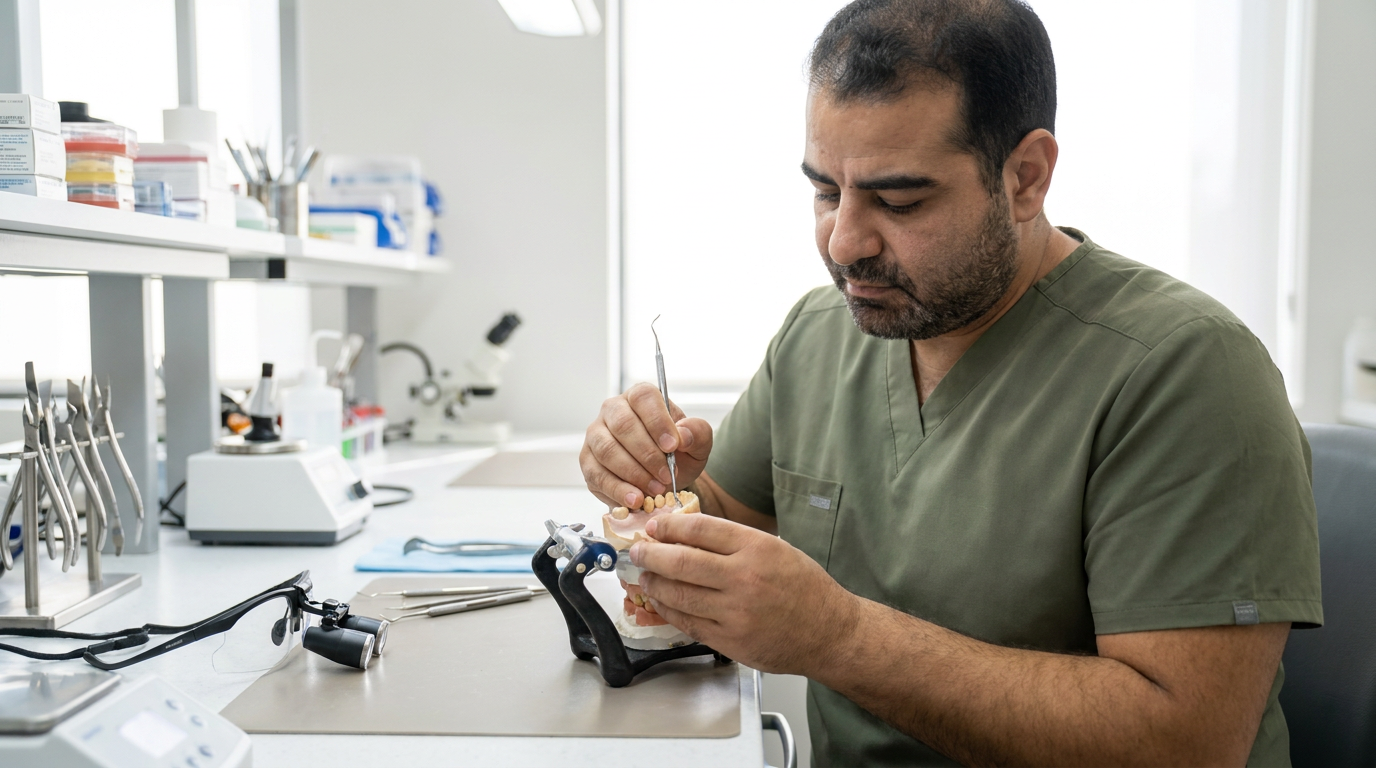
Dr. Mark Farag, a man in his 40s in olive green scrubs, meticulously uses a dental tool to prepare an abutment tooth on a dental model, demonstrating the detailed work involved.

Schedule Your Consultation at Lakeland Dental Center

If you're considering a dental bridge or wish to explore other tooth replacement options, contact Lakeland Dental Center today. Dr. Mark Farag and our team are ready to provide expert guidance and craft a treatment plan tailored to your needs. Visit our website or call us directly to book your appointment.

Dental Bridge Care and Maintenance Tips

Proper care and maintenance are essential for maximizing the lifespan of your dental bridge, focusing on diligent oral hygiene practices and regular dental check-ups. Neglecting these steps can lead to complications affecting both the bridge and surrounding natural teeth.

Caring for your dental bridge isn't significantly different from caring for your natural teeth. Dr. Mark Farag consistently emphasizes the importance of a consistent home care routine to all his patients at Lakeland Dental Center. With good care, your bridge can last for many years.

Key Maintenance Practices

  • Brush Regularl: Brush at least twice a day with a fluoride toothpaste, paying close attention to the areas around the bridge and under the pontic.
  • Floss Daily: Use a floss threader or specialized dental floss designed for bridges to clean underneath the artificial tooth and between the bridge and adjacent natural teeth. This helps prevent plaque buildup and gum disease.
  • Regular Dental Check-ups: Schedule routine check-ups and cleanings with Dr. Farag every six months. These appointments allow him to monitor the bridge's condition and address any potential issues early.
  • Avoid Hard Foods: Steer clear of very hard or sticky foods that could potentially damage the bridge or dislodge it.
  • Address Bruxism: If you grind or clench your teeth (bruxism), Dr. Farag may recommend a nightguard to protect your bridge and natural teeth from excessive force.
Paige, uses a floss threader to clean underneath her dental bridge, focusing intently in a well-lit bathroom.

How Long Do Dental Bridges Last?

With proper care and maintenance, a dental bridge can typically last between 5 and 15 years, with some lasting even longer. The longevity greatly depends on oral hygiene, chewing habits, and the overall health of the supporting teeth and gums.

The lifespan of a dental bridge is a common concern for patients considering this restorative treatment. At Lakeland Dental Center, Dr. Mark Farag always uses high-quality materials and precise techniques to ensure durability. However, the patient's commitment to oral hygiene plays the most significant role in how long their bridge will serve them effectively. Regular professional cleanings and examinations are vital to extending the life of your investment.

Factors such as the type of bridge, the materials used, and the health of the remaining natural teeth can also influence its longevity. For example, an implant-supported bridge often has a longer potential lifespan due to the stability provided by the implants.

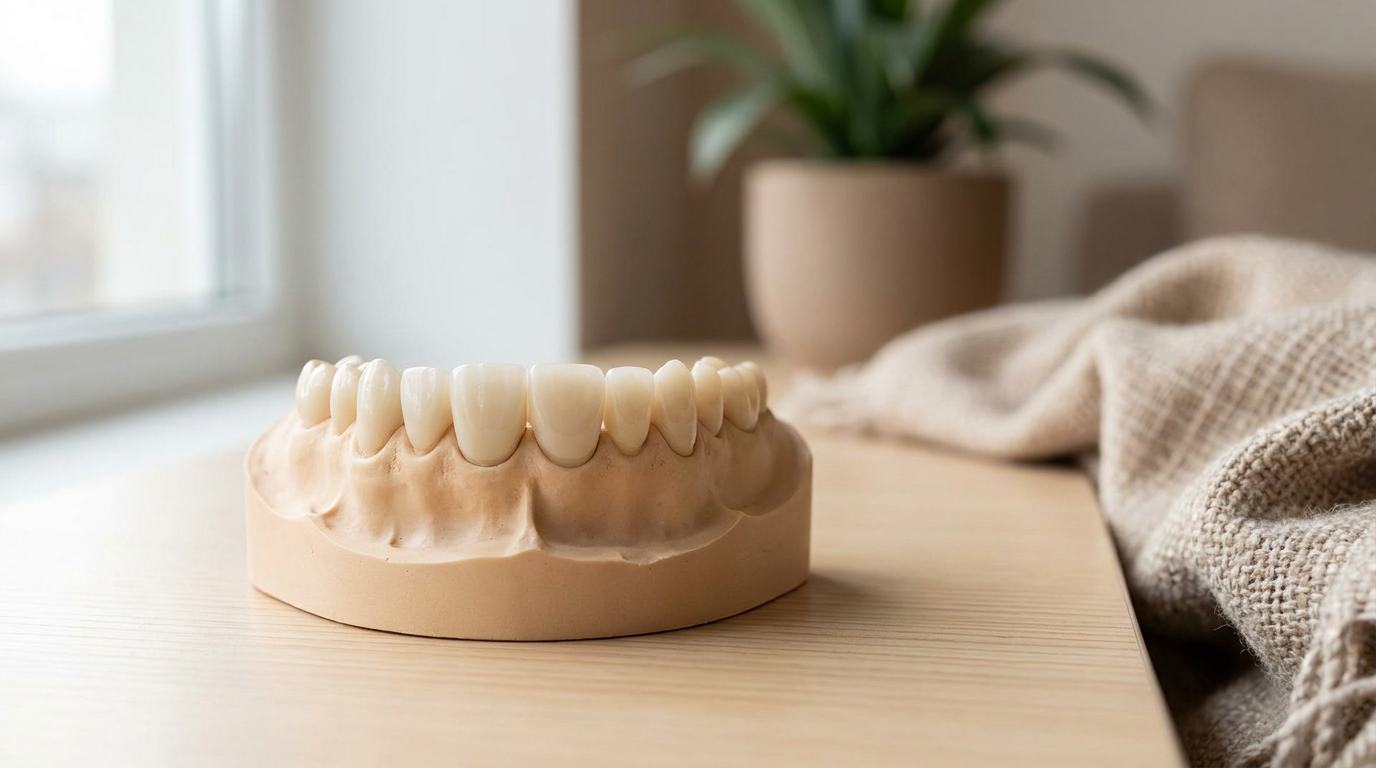
A close-up shot of a well-maintained dental bridge, seamlessly integrated into a set of natural-looking teeth.

Dental Bridges vs. Other Tooth Replacement Options

When considering tooth replacement, dental bridges offer a fixed solution that restores function and aesthetics by using adjacent teeth for support, distinguishing them from removable partial dentures or standalone dental implants, which have different structural approaches.

Understanding the differences between options helps you make an informed decision with Dr. Mark Farag at Lakeland Dental Center. Each choiceβ€”bridges, full/partial dentures, and implantsβ€”has unique advantages based on your specific needs, budget, and oral health status.

Comparing Your Options

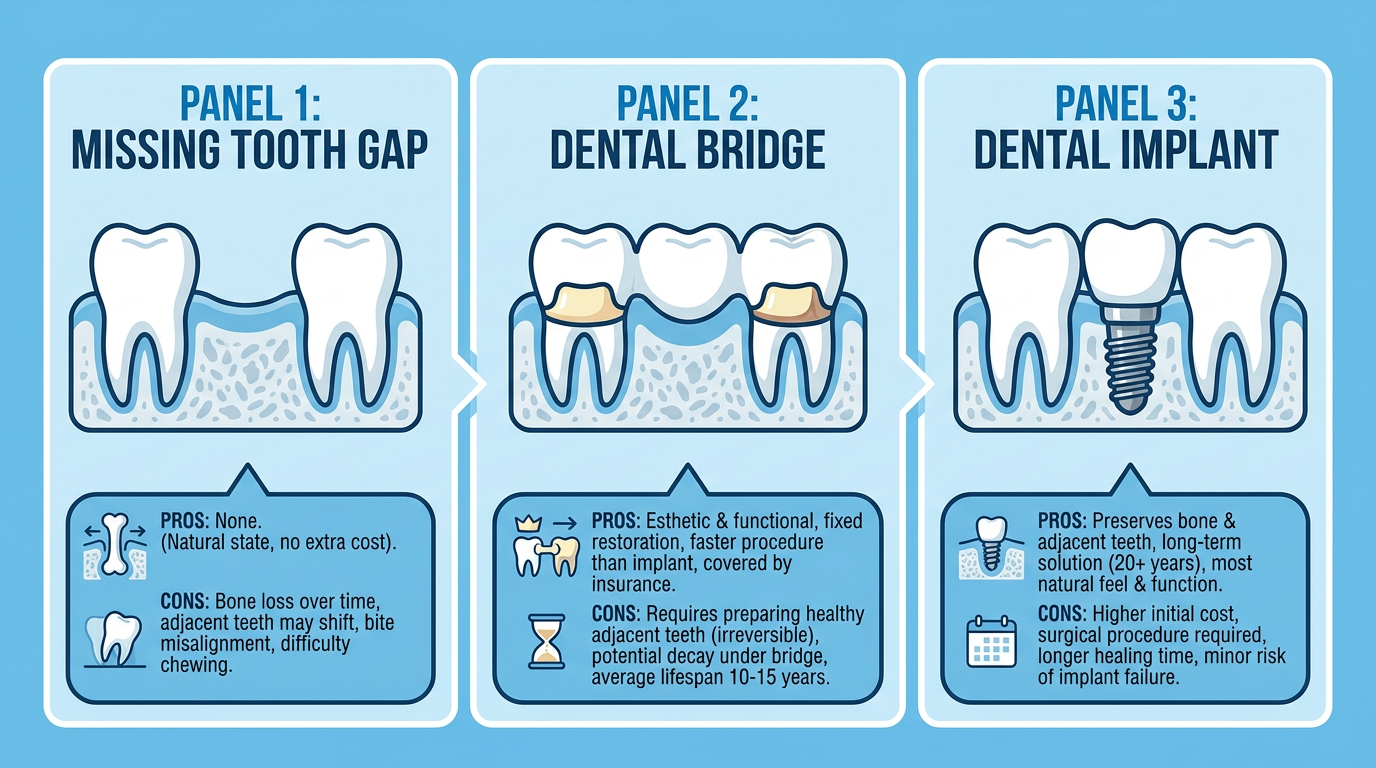
  • Dental Bridges:
    • Pros: Fixed (non-removable), restores chewing ability, improves speech, prevents shifting of adjacent teeth.
    • Cons: Requires alteration of adjacent healthy teeth for traditional bridges.
  • Dental Implants:
    • Pros: Standalone solution, preserves jawbone, does not affect adjacent teeth, highly durable and long-lasting, feels most like a natural tooth.
    • Cons: More invasive procedure, longer treatment timeline, generally higher initial cost.
  • Partial Dentures:
    • Pros: Removable, less invasive, often more affordable upfront.
    • Cons: Can be less stable, may affect speech slightly, needs to be removed for cleaning, may accelerate bone loss over time.

For some patients, a dental bridge is the optimal and most straightforward solution, especially if the adjacent teeth already require crowns or restorative work.

A three-panel comparison visual.

What This Means for Your Oral Health

Choosing the right tooth replacement option is a significant decision that impacts your oral health, comfort, and confidence. A dental bridge, when properly placed and maintained, can seamlessly restore your smile, improve chewing function, and prevent further dental complications like teeth shifting or bone loss. Dr. Mark Farag and the dedicated team at Lakeland Dental Center are committed to providing personalized care and guiding you through every step of this process.

Whether you're exploring dental bridges for the first time or considering alternatives like dental implants or dentures, a comprehensive consultation with Dr. Farag is the best starting point. He utilizes advanced diagnostic tools, including digital X-rays and 3-D imaging, to assess your unique situation and recommend the most effective and lasting solution. Investing in a dental bridge is an investment in your health and quality of life, ensuring you can eat, speak, and smile with renewed comfort and certainty.

Dr. Mark Farag, a man in his 40s wearing a blue lab coat over a professional shirt, sits at his desk in his consultation room, reviewing digital X-ray images on a large monitor with a thoughtful expression.

Frequently Asked Questions

1. What is a dental bridge?
A dental bridge is a fixed dental restoration that replaces one or more missing teeth by joining an artificial tooth to adjacent teeth or dental implants.

2. How long does it take to get a dental bridge?
Typically, getting a dental bridge requires two visits over a few weeks, with the first visit for preparation and impressions, and the second for placement.

3. Does getting a bridge hurt?
The procedure is performed under local anesthesia, so you shouldn't feel pain. Some mild soreness or sensitivity after the appointment is normal and manageable.

4. Can a dental bridge get cavities?
The natural teeth supporting the bridge can still get cavities if not properly maintained, highlighting the importance of diligent oral hygiene.

5. Are dental bridges noticeable?
Modern dental bridges are custom-made to match the color and shape of your natural teeth, making them blend in seamlessly and look very natural.

6. How do I clean under a dental bridge?
You clean under a dental bridge using a floss threader or specialized interdental brush to remove food particles and plaque from the pontic and supporting teeth.

7. How much does a dental bridge cost in Lakeland, FL?
The cost of a dental bridge varies depending on the type of bridge, materials, and number of teeth involved. A consultation will provide an accurate estimate.

8. What if my adjacent teeth aren't strong enough for a bridge?
Dr. Mark Farag may suggest an implant-supported bridge or another restorative option like a dental implant or partial denture if adjacent teeth are too weak.

9. Is a dental bridge permanent?
A dental bridge is a fixed restoration, meaning it's cemented into place and not removable by the patient, though it may need replacement after many years.

10. Can I get a dental bridge at Lakeland Dental Center?
Yes, Lakeland Dental Center offers dental bridges as part of our restorative dentistry services. Schedule a consultation with Dr. Mark Farag to discuss your options.

Stay Informed with Expert Insights & Tips About Dental Care

7.10.2026

Lakeland Dental Crowns

Dental crowns offer a durable and aesthetic solution for restoring damaged teeth, protecting them from further issues and improving overall oral health.

7.10.2026

Finding Your Best Implant Dentist in Lakeland, FL

Discover how Danielle found the best implant dentist in Lakeland, FL, for her natural-looking and long-lasting dental implant solution.

6.2.2026

Your Trusted Dentist in Lakeland, FL

Find your perfect smile in Lakeland, FL! Discover comprehensive, compassionate dental care with Dr. Mark Farag and his team.

Stories Behind Lakeland’s Smiles

At Lakeland Dental Center, our patients’ experiences speak for themselves. From gentle cleanings to transformative cosmetic and implant treatments, each story reflects the care, comfort, and confidence we strive to deliver every day.

ο€…
ο€…
ο€…
ο€…
ο€…
I was nervous at first, but Dr. Maher Farag made the entire visit so calming and comfortable. The team is incredibly kind. I finally feel confident about my dental care.
Olivia K.
ο€…
ο€…
ο€…
ο€…
ο€…
β€œI had a sudden dental emergency, and Dr. Maher Farag saw me right away. He handled everything quickly and gently. I’m beyond grateful.
Chloe M.
ο€…
ο€…
ο€…
ο€…
ο€…
Dr. Mark Farag is both professional and personable. Every appointment feels smooth and stress-free. I trust him completely with my care.
Samuel J.
ο€…
ο€…
ο€…
ο€…
ο€…
The moment I stepped in, I felt welcomed. Dr. Maher Farag is incredibly gentle and thorough. I’m so happy I found this practice.
Hailey V.
ο€…
ο€…
ο€…
ο€…
ο€…
Very professional and enjoyable office. Explained all aspects of what dental treatment I received and needed in the future. They are patient centered and answer all your questions regarding your needs. A great experience from start to finish.
Dennis R.
ο€…
ο€…
ο€…
ο€…
ο€…
Hands down the best dental experience I’ve ever had. Dr. Mark Farag listened to my concerns and provided exceptional care.
Lucas H.
ο€…
ο€…
ο€…
ο€…
ο€…
Dr. Maher Farag transformed my smile with such precision and care. His attention to detail is truly exceptional. I highly recommend him.
Isabella F.
ο€…
ο€…
ο€…
ο€…
ο€…
Every visit with Dr. Mark Farag is easy and reassuring. He explains everything clearly and genuinely cares about his patients.
Ryan S.
ο€…
ο€…
ο€…
ο€…
ο€…
As someone who struggles with dental anxiety, I can’t thank Dr. Maher Farag enough. His gentle approach made all the difference.
Maya D.
ο€…
ο€…
ο€…
ο€…
ο€…
Fantastic care from start to finish. Dr. Mark Farag was professional, patient, and extremely skilled. My treatment was painless and the outcome exceeded expectations.
Christian W.

Schedule An Appointment

Now Accepting New Patients
Business Hours

Thank you for booking your appointment!

We’ve received your request and will contact you soon to confirm the details. We look forward to seeing you at Lakeland Dental Center.

We couldn’t submit your form.

Something interrupted the process, possibly a slow connection or a temporary glitch. Try again in a moment. If your info disappeared, we're really sorry and ready to help if you need it.