Back to Blogs

How Dental Crowns Restore Damaged Teeth Effectively

Dental crowns effectively restore damaged teeth, protecting them from further harm and enhancing their strength and appearance for a healthy smile.

October 7, 2026
โ€ข
2 min read
Linda bites into a red apple at a kitchen counter, looking at the viewer with a slightly concerned expression.
Back to Blogs

How Dental Crowns Restore Damaged Teeth Effectively

Linda bites into a red apple at a kitchen counter, looking at the viewer with a slightly concerned expression.

Dental crowns effectively restore damaged teeth, protecting them from further harm and enhancing their strength and appearance for a healthy smile.

October 7, 2026
โ€ข
2 min read

Understanding Dental Crowns

Dental crowns offer a robust and aesthetic solution for teeth compromised by decay, fracture, or extensive wear. These custom-made caps fit securely over an entire damaged tooth, restoring its original shape, strength, and appearance. They essentially provide a new, protective outer layer for the tooth.

This makes them a vital tool in restorative dentistry, protecting vulnerable teeth from further harm.

Brittany, a woman in her early forties, recently visited Lakeland Dental Center with a persistent ache in her back molar. She had a very old, large filling that Dr. Mark Farag noted was showing signs of significant breakdown. Brittany was concerned about losing the tooth entirely.

Her main goal was to understand all her options and save the tooth if possible, as she valued her natural dentition. Dr. Mark Farag explained how a dental crown could provide the necessary structural support to protect her tooth.

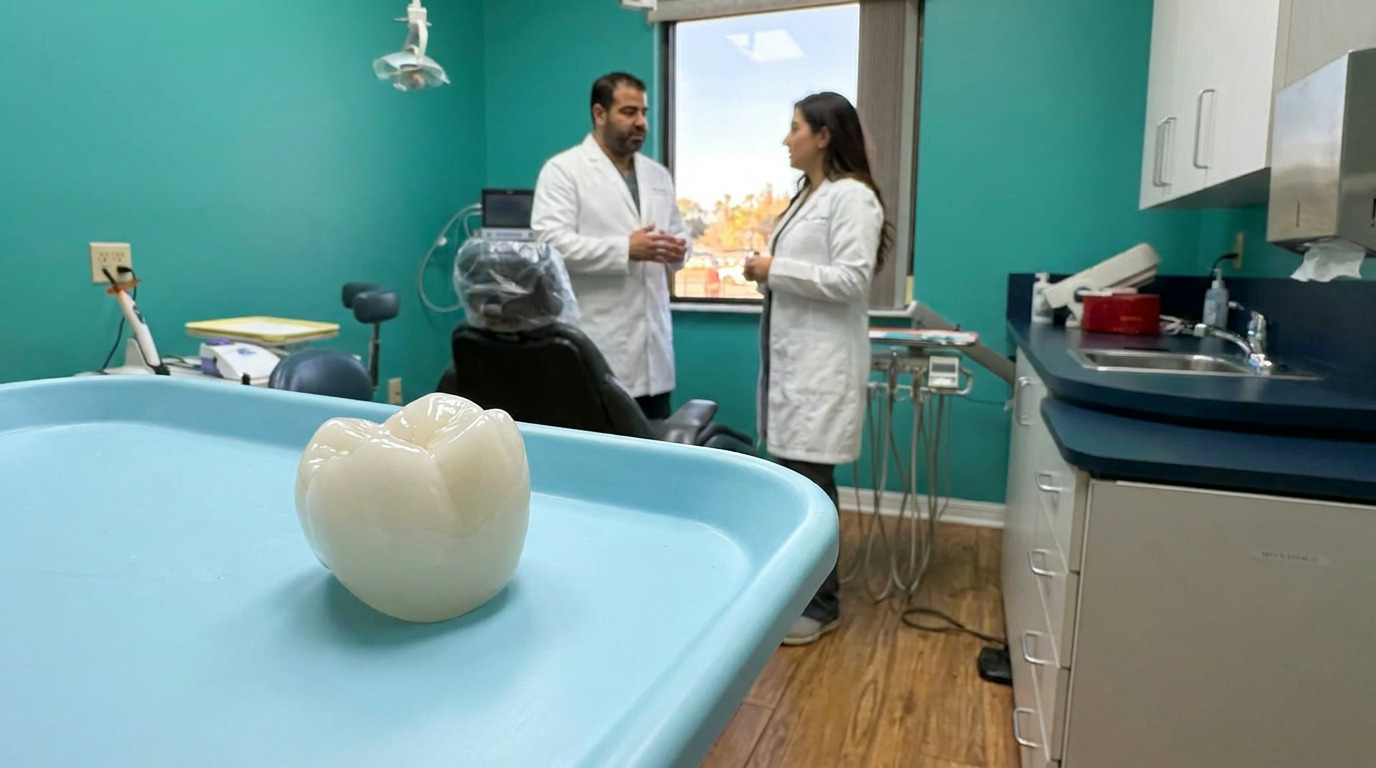
A ceramic dental crown sits on a blue tray in the foreground, with two dentists in white lab coats talking in a dental operatory with teal walls and a window in the background.

What Are Dental Crowns?

Dental crowns are essentially caps that completely cover a damaged tooth, restoring its form and function. They are meticulously crafted to blend seamlessly with existing teeth, providing both strength and aesthetic appeal. Crowns are a long-term solution for teeth that have lost too much structure to be repaired with a simple filling.

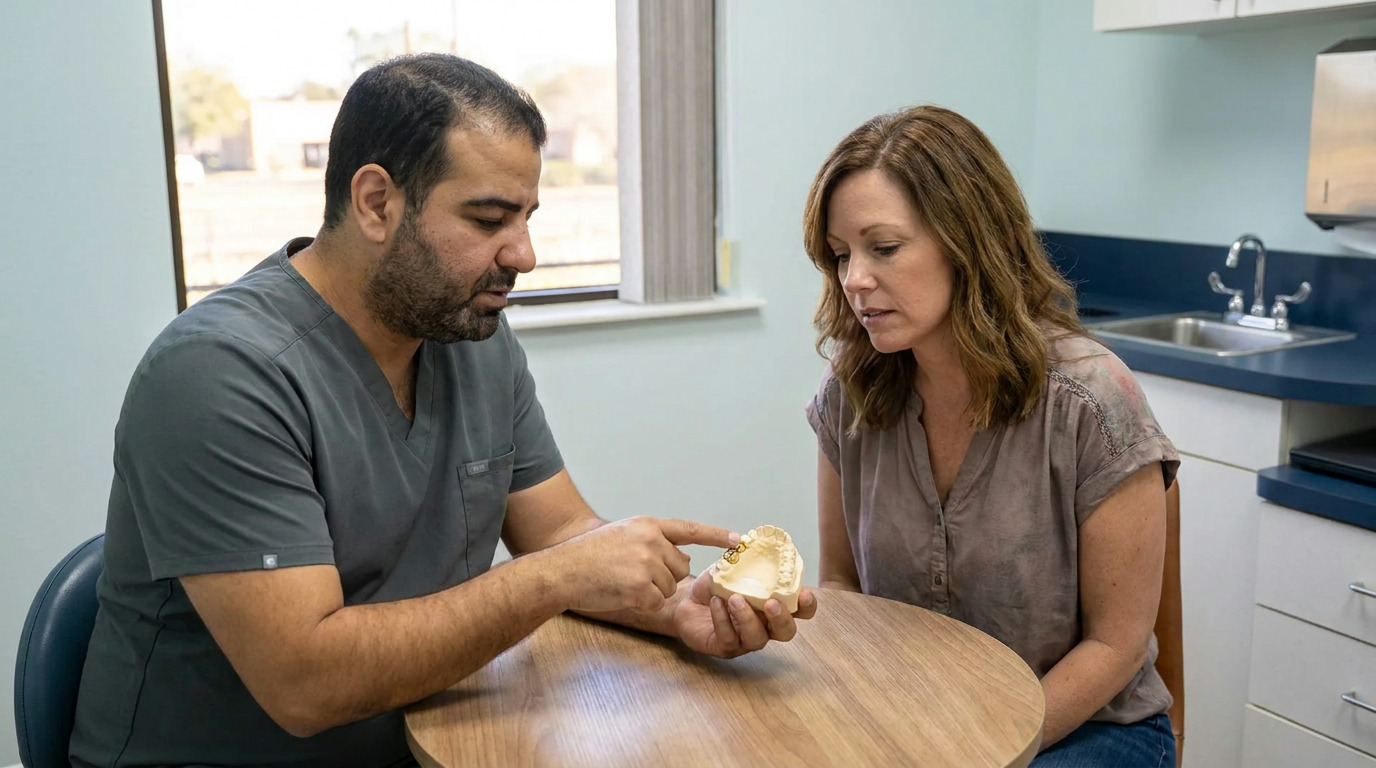
Dr. Mark Farag often emphasizes their role in preserving natural tooth structure. Brittany initially imagined a crown as a simple covering, but Dr. Mark Farag elaborated on the precision involved. He showed her models demonstrating how crowns are custom-designed for each patient. He explained that a crown can prevent a tooth from fracturing under the pressure of chewing.

Dr. Mark Farag discussed the primary reasons why patients, like Brittany, often need a crown:

  • Protecting a weak tooth from fracturing or holding together parts of a cracked tooth.
  • Restoring an already broken tooth or a tooth severely worn down.
  • Covering and supporting a tooth with a large filling when there isn't much tooth left.
  • Holding a dental bridge in place.
  • Covering discolored or poorly shaped teeth for aesthetic improvement.
Dr. Mark Farag, wearing gray scrubs, points to a dental model while sitting at a wooden table with a woman in a brown shirt, in a dental consultation room.

Types of Dental Crowns

Choosing the right type of dental crown depends on various factors, including the tooth's location, the patient's bite, and aesthetic preferences. Modern dentistry offers several excellent materials, each with unique advantages. Dr. Mark Farag always discusses these options thoroughly with his patients to ensure the best fit for their individual needs. Brittany was particularly interested in materials that would look natural.

Dr. Mark Farag explained that the most common materials used for crowns today prioritize both durability and appearance. He mentioned that while traditional gold crowns are still an option for some, newer materials offer fantastic cosmetic results. Brittany appreciated learning about the different choices available for her back molar.

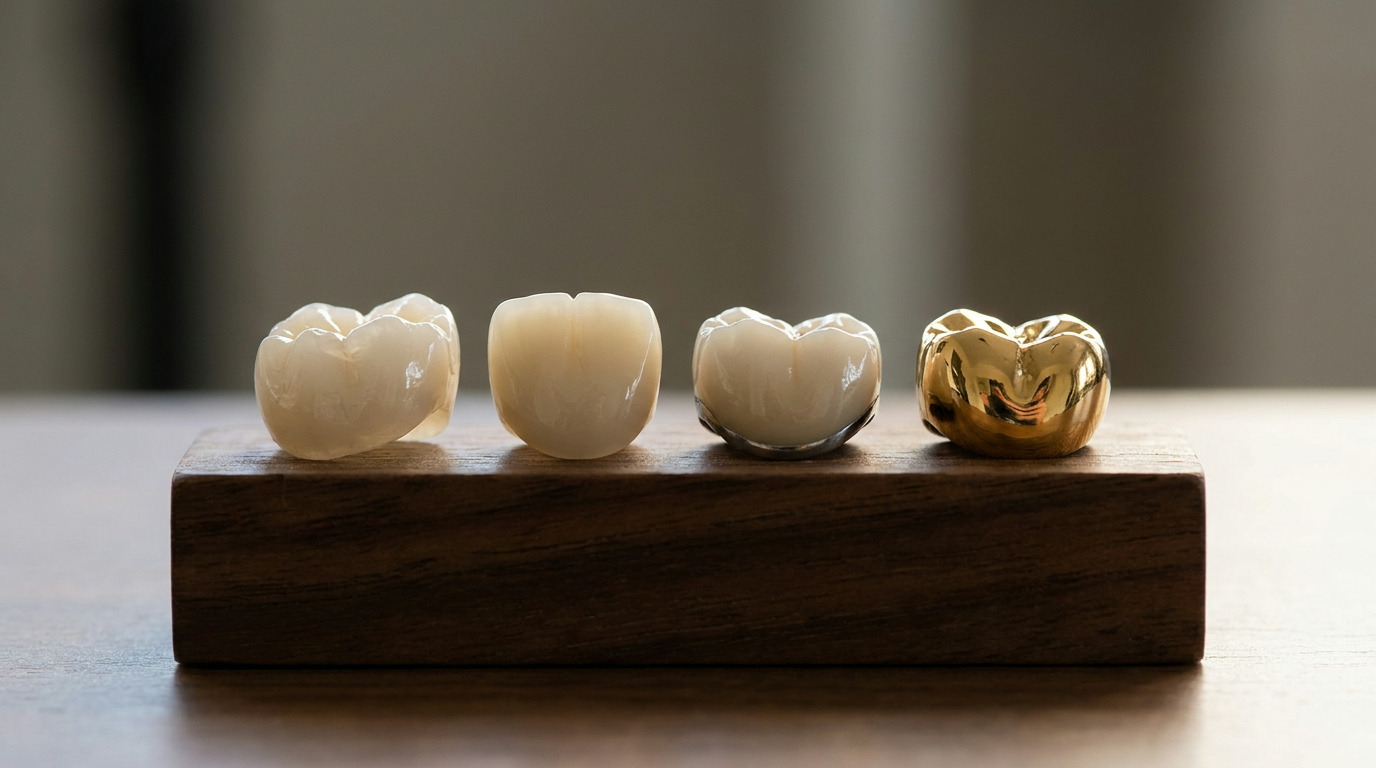
Dr. Mark Farag outlined the main types of crowns used at Lakeland Dental Center:

  • Ceramic or Porcelain Crowns: These are popular for their natural appearance, blending well with adjacent teeth. They are ideal for front teeth due to their excellent aesthetics.
  • Zirconia Crowns: Known for their exceptional strength and durability, zirconia crowns are an excellent choice for both front and back teeth. They are also highly biocompatible.
  • Porcelain-fused-to-metal Crowns (PFM): These crowns offer a good balance of strength and aesthetics. The metal substructure provides support, while the porcelain exterior mimics natural tooth color.
  • Metal Alloys: Gold alloys and other base-metal alloys are highly durable and fracture-resistant. These are often used for molars where biting forces are strongest, though less common for visible teeth.
Four dental crowns, three light-colored and one gold, are displayed on a dark wooden block against a blurred background.

When Is a Dental Crown Needed?

A dental crown becomes necessary when a toothโ€™s structural integrity is compromised beyond what a filling can repair. This often happens due to extensive decay, significant fractures, or after root canal therapy. Patients might experience sensitivity to temperature, pain when chewing, or even see visible cracks, signaling the need for an evaluation.

Dr. Mark Farag's comprehensive examinations are key to identifying these issues early. Brittanyโ€™s large, old filling had started to crumble, leaving her molar vulnerable. She had noticed increased sensitivity and a mild ache, especially when eating anything hard.

Dr. Mark Farag gently probed the area, confirming the filling was failing and that the remaining tooth structure was weakened. This type of damage is often too extensive for a simple repair. He explained that if left untreated, a compromised tooth could further fracture or become infected, potentially leading to more complex and costly treatments like an extraction or root canal therapy.

A crown acts as a protective shield, preventing such progression. This proactive approach helps preserve the natural tooth for many years.

A man with a pained expression holds a blue ice pack to his cheek while sitting at a desk with a laptop, mug, and notebook.

Protect Your Smile's Future

If you are experiencing tooth pain, sensitivity, or believe you might need a dental crown, do not hesitate to contact Lakeland Dental Center today. Dr. Mark Farag and his compassionate team are ready to provide a thorough evaluation and discuss the best restorative solutions for your unique situation. Schedule your consultation to restore your smile's strength and beauty.

The Crown Procedure Explained

Receiving a dental crown typically involves two separate appointments, allowing for meticulous preparation and custom fabrication. This ensures the crown fits perfectly and functions effectively. The process is designed to be as comfortable and efficient as possible, prioritizing the patientโ€™s experience. Dr. Mark Faragโ€™s team guides patients through each step.

During Brittany's first visit, after numbing the area, Dr. Mark Farag carefully removed the failing filling and any decayed tissue. He then reshaped the tooth to create a stable foundation for the crown, making sure enough tooth structure remained to support it. An impression of the prepared tooth was taken, along with impressions of the opposing arch to ensure a proper bite.

Key steps in the crown placement procedure include:

  • Tooth Preparation: The tooth is carefully re-contoured to create space for the crown.
  • Impressions: Detailed impressions are taken and sent to a dental lab for custom crown fabrication.
  • Temporary Crown: A temporary crown is placed to protect the prepared tooth while the permanent one is being made.
  • Permanent Placement: At the second visit, the temporary crown is removed, and the custom-made permanent crown is bonded securely into place.
  • Adjustment and Polish: Dr. Mark Farag makes any necessary bite adjustments and polishes the crown for a smooth, comfortable finish.
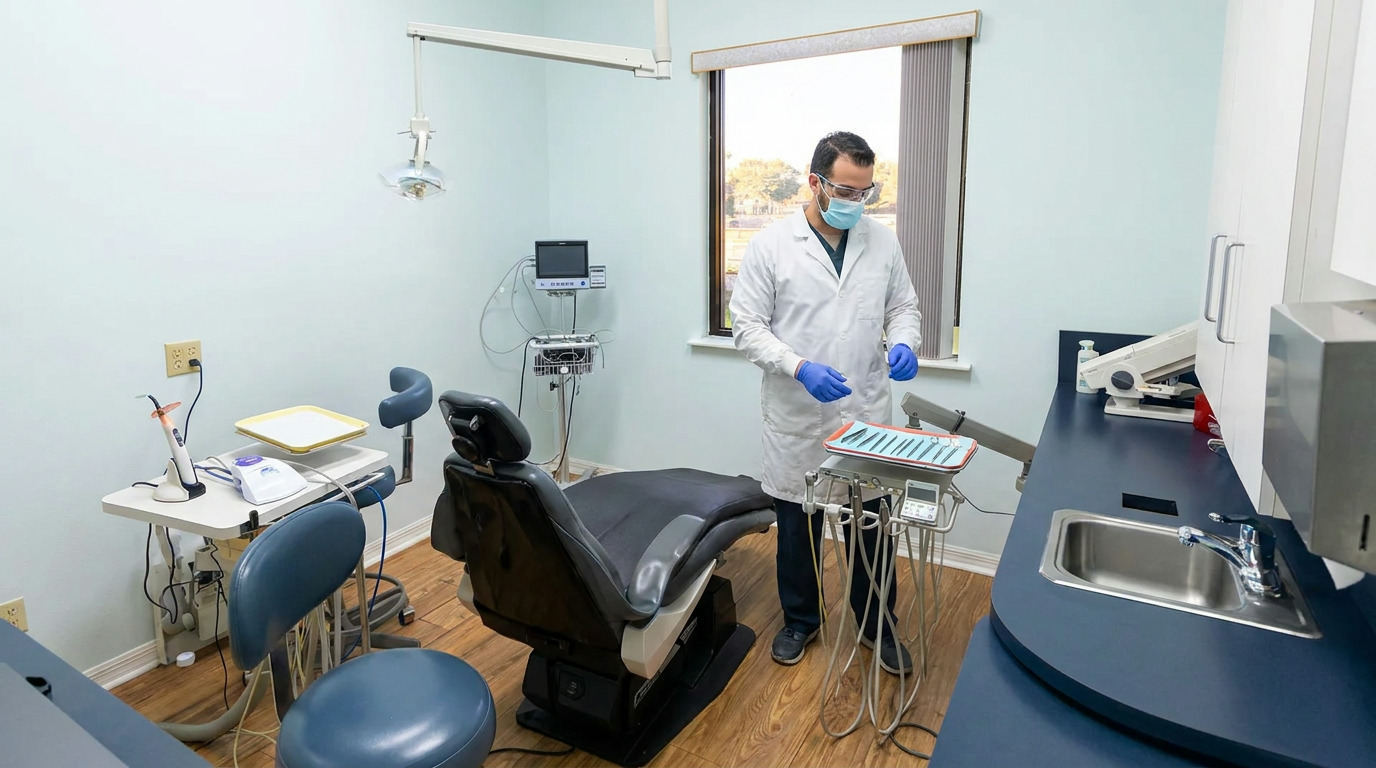
A dentist in a white lab coat, blue gloves, and a face mask stands next to a dental chair and instrument tray in a brightly lit operatory with a window.

What to Expect Post-Crown

After a dental crown is placed, patients can typically expect restored function and a comfortable bite. It is normal to experience some mild sensitivity to hot or cold temperatures immediately following the procedure, but this usually subsides within a few days. The restored tooth should feel and function like a natural tooth. Dr. Mark Farag always provides comprehensive aftercare instructions.

Brittany was advised to avoid sticky or hard foods for the first few hours after her permanent crown was cemented to allow the bonding agent to fully set. She was reassured that any minor sensitivity she might feel would be temporary. Dr. Mark Farag also emphasized the importance of maintaining excellent oral hygiene around the new crown. Regular brushing and flossing are crucial.

He reminded her that a crown requires the same diligent care as natural teeth to ensure its longevity. The underlying tooth structure can still be susceptible to decay at the crown margin if hygiene is neglected. Adhering to these post-procedure guidelines helps maximize the lifespan of the restoration.

A man brushes his lower teeth with a clear toothbrush while holding an interdental brush in his other hand, in a bathroom with a sink and window in the background.

Maintaining Your Dental Crown

With proper care, a dental crown can last for many years, often between 10 to 15 years, or even longer. Longevity largely depends on consistent oral hygiene practices and regular dental check-ups. Crowns are a significant investment in oral health, and good maintenance protects that investment. Dr. Mark Farag stresses that a crown isn't a "set it and forget it" solution.

Brittany was keen to ensure her new crown would last. She asked Dr. Mark Farag for specific tips. He explained that while the crown itself cannot decay, the tooth underneath and the surrounding gum tissue can still be affected by plaque and bacteria. This can compromise the crown's integrity over time. Maintaining the crown contributes directly to the overall health of the mouth.

Key practices for maintaining your dental crown include:

  • Daily Brushing: Brush at least twice a day with fluoride toothpaste. Pay special attention to the gumline around the crown.
  • Regular Flossing: Floss daily to remove plaque and food particles from around the crown and between teeth.
  • Avoid Hard Foods: Steer clear of extremely hard candies, ice, or other objects that could chip or break the crown.
  • Protect Against Grinding: If you grind or clench your teeth, Dr. Mark Farag might recommend a nightguard to protect your crown and other teeth.
  • Routine Dental Visits: Schedule regular check-ups and cleanings & exams at Lakeland Dental Center for professional evaluation and maintenance.
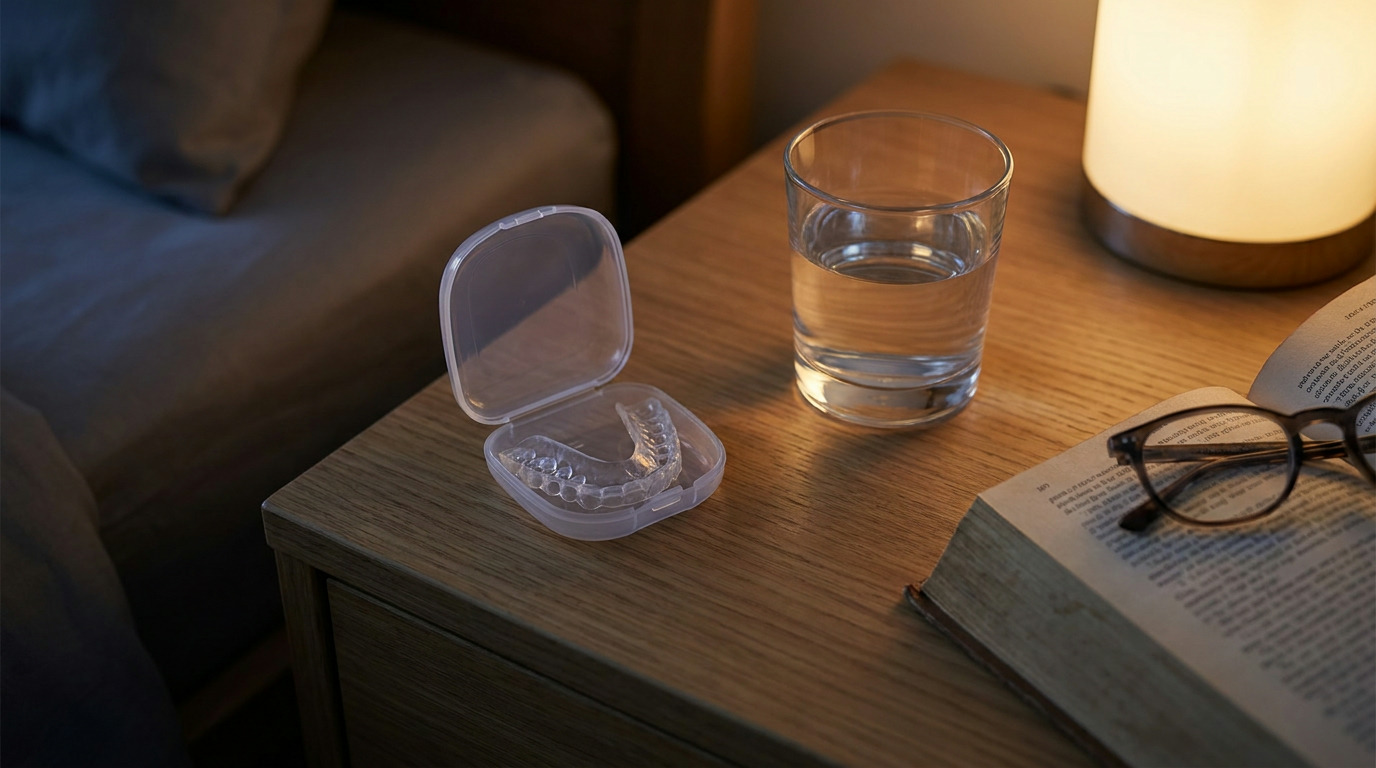
A clear dental night guard sits in an open case on a wooden bedside table next to a glass of water, an open book, reading glasses, and a glowing lamp, with a bed in the background.

A Lasting Solution for Your Smile

Dental crowns represent a cornerstone of modern restorative dentistry, offering both protection and aesthetic enhancement for damaged teeth. They are a testament to how far dental technology has advanced, allowing individuals to maintain healthy, functional smiles for decades. The decision to pursue a crown is an investment in long-term oral health, preventing further complications and preserving the natural tooth structure.

Dr. Mark Farag and his team take pride in crafting these custom restorations, ensuring each patient receives care tailored to their unique needs and concerns. Brittany's journey from a nagging ache to a fully restored, strong molar was a smooth one thanks to the expert care at Lakeland Dental Center.

Her new zirconia crown blended seamlessly with her other teeth, and she no longer experienced any sensitivity or discomfort. She found newfound confidence in her ability to chew comfortably and speak clearly, a significant improvement from her initial concerns about losing the tooth. Her experience reinforced the importance of addressing dental issues promptly and understanding the long-term benefits of comprehensive treatment.

Brittany now confidently smiles, knowing her tooth is well-protected and contributes to her overall well-being. The restorative power of a dental crown truly made a difference in her daily life.

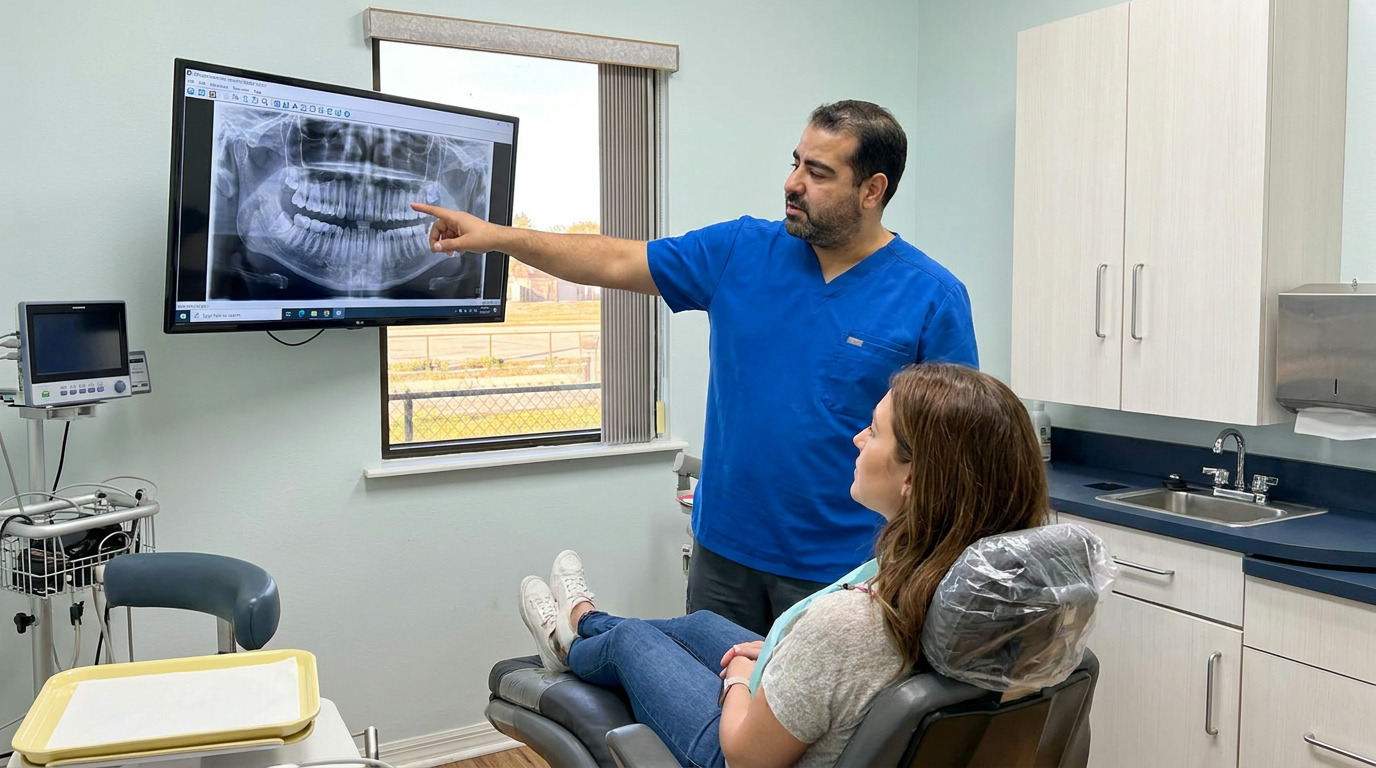
Dr. Mark Farag in blue scrubs points to a dental X-ray on a wall-mounted monitor while Ashley, a patient, sits in a dental chair.

Frequently Asked Questions

1. What exactly is a dental crown?
A dental crown is a custom-made, tooth-shaped cap that is permanently placed over a damaged or weakened tooth. Its purpose is to restore the tooth's shape, size, strength, and appearance, providing protection from further damage. Dr. Mark Farag meticulously crafts each crown to fit seamlessly.

2. How long do dental crowns typically last?
With diligent oral hygiene and regular dental check-ups, dental crowns can last a long time, often between 10 to 15 years or even longer. Factors like chewing habits and the material of the crown can influence its lifespan. Dr. Mark Farag provides guidance on maximizing crown longevity.

3. Is getting a dental crown painful?
The dental crown procedure is performed under local anesthesia, ensuring the patient experiences no pain during the treatment itself. Some mild sensitivity or discomfort may occur after the anesthesia wears off, but this is typically manageable with over-the-counter pain relievers and subsides quickly. Dr. Mark Farag prioritizes patient comfort.

4. What are the common materials used for dental crowns?
Common materials include ceramic (porcelain), zirconia, porcelain-fused-to-metal (PFM), and metal alloys. Each material offers different benefits in terms of aesthetics, strength, and durability. Dr. Mark Farag will discuss which material is best suited for your specific tooth and needs.

5. Can a crowned tooth still get a cavity?
Yes, a crowned tooth can still get a cavity at the margin where the crown meets the natural tooth structure. This is why maintaining excellent oral hygiene, including regular brushing and flossing, is crucial. Routine check-ups with Dr. Mark Farag help detect any issues early.

6. How do I care for my new dental crown?
To care for your dental crown, continue with regular brushing and flossing to keep the crown and surrounding gum tissue clean. Avoid biting on very hard foods or objects, which could potentially chip or damage the crown. Dr. Mark Farag recommends consistent dental visits for professional cleaning and monitoring.


Stay Informed with Expert Insights & Tips About Dental Care

9.8.2026

Are Dental Implants Right for You?

Understanding dental implant candidacy, health factors, and process steps helps determine if this restorative solution is right for you.

8.6.2026

What to Expect During a Dental X-Ray Visit

Dental X-rays are a vital diagnostic tool, revealing hidden issues not visible to the naked eye, and modern digital X-rays significantly reduce radiation exposure for patient safety.

7.10.2026

What to Know Before Getting a Dental Bridge

Dental bridges are fixed restorations that replace missing teeth, restoring function, aesthetics, and preventing shifts in adjacent teeth.

Stories Behind Lakelandโ€™s Smiles

At Lakeland Dental Center, our patientsโ€™ experiences speak for themselves. From gentle cleanings to transformative cosmetic and implant treatments, each story reflects the care, comfort, and confidence we strive to deliver every day.

๏€…
๏€…
๏€…
๏€…
๏€…
I was nervous at first, but Dr. Maher Farag made the entire visit so calming and comfortable. The team is incredibly kind. I finally feel confident about my dental care.
Olivia K.
๏€…
๏€…
๏€…
๏€…
๏€…
โ€œI had a sudden dental emergency, and Dr. Maher Farag saw me right away. He handled everything quickly and gently. Iโ€™m beyond grateful.
Chloe M.
๏€…
๏€…
๏€…
๏€…
๏€…
Dr. Mark Farag is both professional and personable. Every appointment feels smooth and stress-free. I trust him completely with my care.
Samuel J.
๏€…
๏€…
๏€…
๏€…
๏€…
The moment I stepped in, I felt welcomed. Dr. Maher Farag is incredibly gentle and thorough. Iโ€™m so happy I found this practice.
Hailey V.
๏€…
๏€…
๏€…
๏€…
๏€…
Very professional and enjoyable office. Explained all aspects of what dental treatment I received and needed in the future. They are patient centered and answer all your questions regarding your needs. A great experience from start to finish.
Dennis R.
๏€…
๏€…
๏€…
๏€…
๏€…
Hands down the best dental experience Iโ€™ve ever had. Dr. Mark Farag listened to my concerns and provided exceptional care.
Lucas H.
๏€…
๏€…
๏€…
๏€…
๏€…
Dr. Maher Farag transformed my smile with such precision and care. His attention to detail is truly exceptional. I highly recommend him.
Isabella F.
๏€…
๏€…
๏€…
๏€…
๏€…
Every visit with Dr. Mark Farag is easy and reassuring. He explains everything clearly and genuinely cares about his patients.
Ryan S.
๏€…
๏€…
๏€…
๏€…
๏€…
As someone who struggles with dental anxiety, I canโ€™t thank Dr. Maher Farag enough. His gentle approach made all the difference.
Maya D.
๏€…
๏€…
๏€…
๏€…
๏€…
Fantastic care from start to finish. Dr. Mark Farag was professional, patient, and extremely skilled. My treatment was painless and the outcome exceeded expectations.
Christian W.

Schedule An Appointment

Now Accepting New Patients
Business Hours
This is some text inside of a div block.

Weโ€™ve received your request and will contact you soon to confirm the details. We look forward to seeing you at Lakeland Dental Center.

We couldnโ€™t submit your form.

Something interrupted the process, possibly a slow connection or a temporary glitch. Try again in a moment. If your info disappeared, we're really sorry and ready to help if you need it.